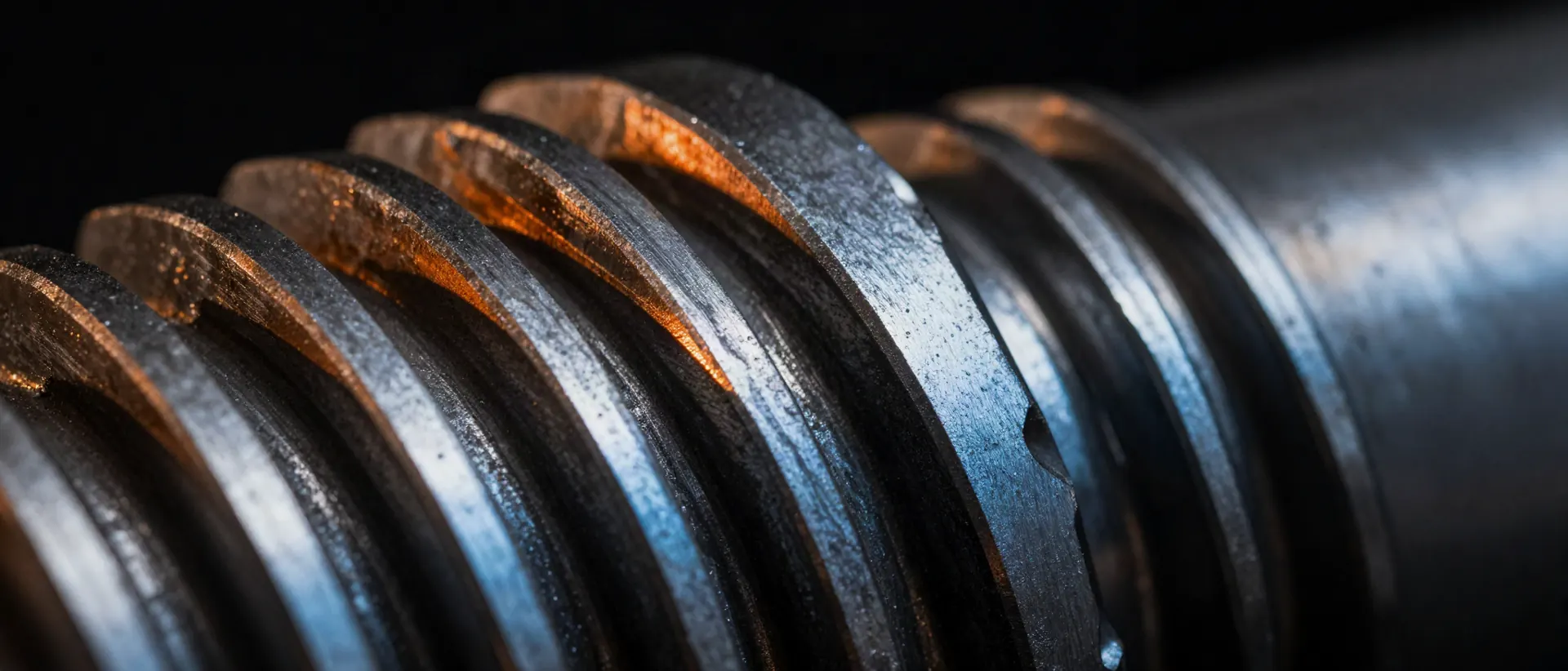
Where the howl usually comes from
A correctly set final drive does not howl — that is the most common difference between “overhauled” and “properly overhauled”. So when the final drive of a classic Porsche howls, contact pattern and backlash are among the first things we check.
Typical cases from our workshop:
- A howling final drive caused by an incorrectly set contact pattern — a classic on the 901 gearbox of the early 911.
- Howling after an improper ring-and-pinion swap — a familiar case on the 915 gearbox.
- Howling after improper previous repairs — no rarity even on the robust 964 gearbox.
- A howling or droning rear axle, especially under load — a typical problem there: previous owners’ “repairs” without setting up the ring and pinion.
Why setting up makes the difference
A precise ring and pinion only performs when backlash and contact pattern are right. Setting up to factory specification means adjusting backlash and pinion depth and checking the contact pattern — with original factory tooling. On our newly made final drives, the setting dimension for optimum running is etched into the face of the pinion.
The gearbox test bench is part of the check: an incorrectly set ring and pinion shows up on the bench — not after 500 km in the car. After every rebuild, all gears are shifted there and the smooth running of the final drive, sealing and noise behaviour are checked.
How the repair runs here
In a gearbox rebuild the gearbox is fully stripped, measured and reconditioned — the hypoid drive set up with original tooling, contact pattern checked, test-bench run included. For rear axles and rear-axle differentials there is the fixed-price overhaul — with or without a limited-slip differential, including setting up the ring and pinion to factory specification.
You remove the gearbox and send it in — stripping, measuring, a binding quote, reconditioning, the test-bench run and ready-to-install return shipping are on us.